
Oundle School Cricket Pavilion
Cricket Pavilion
Location: Northamptonshire
Date: 2013-2015
Simplicity, Order, and Efficiency for a Cricket Pavilion
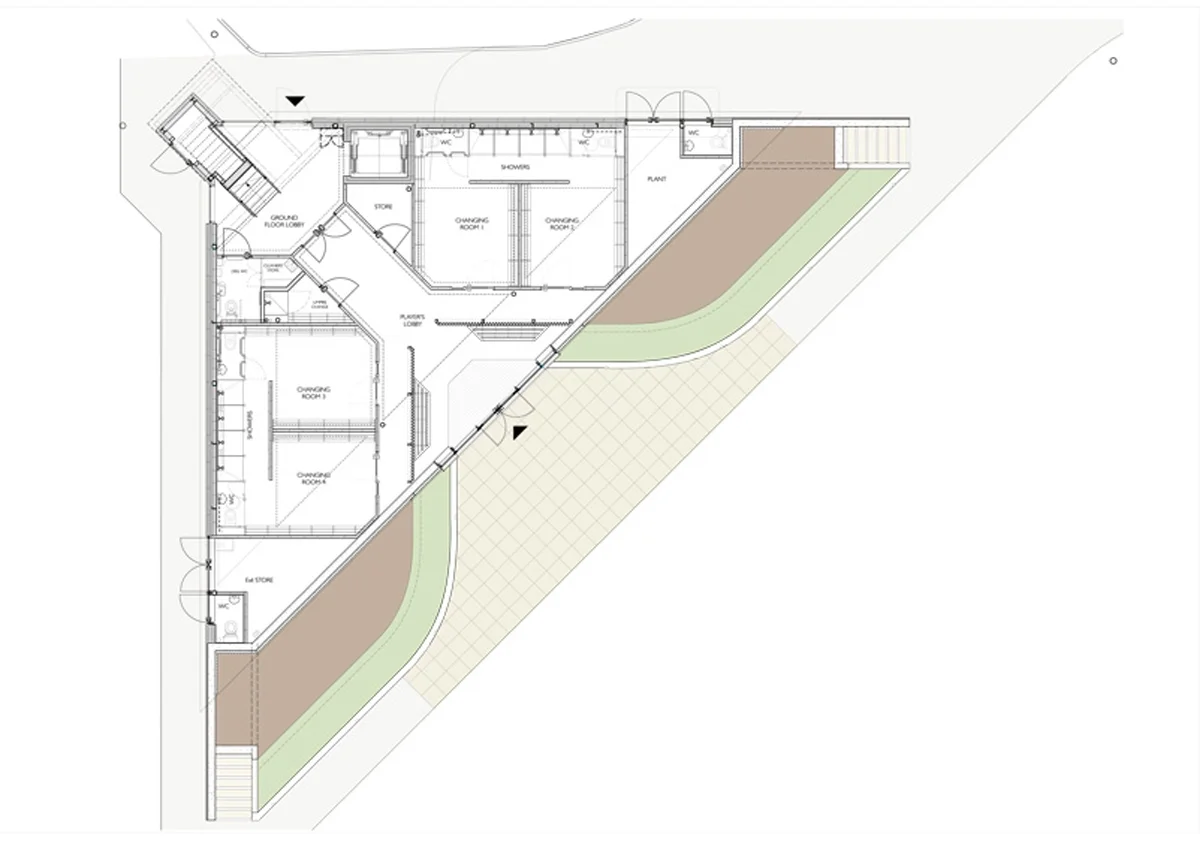
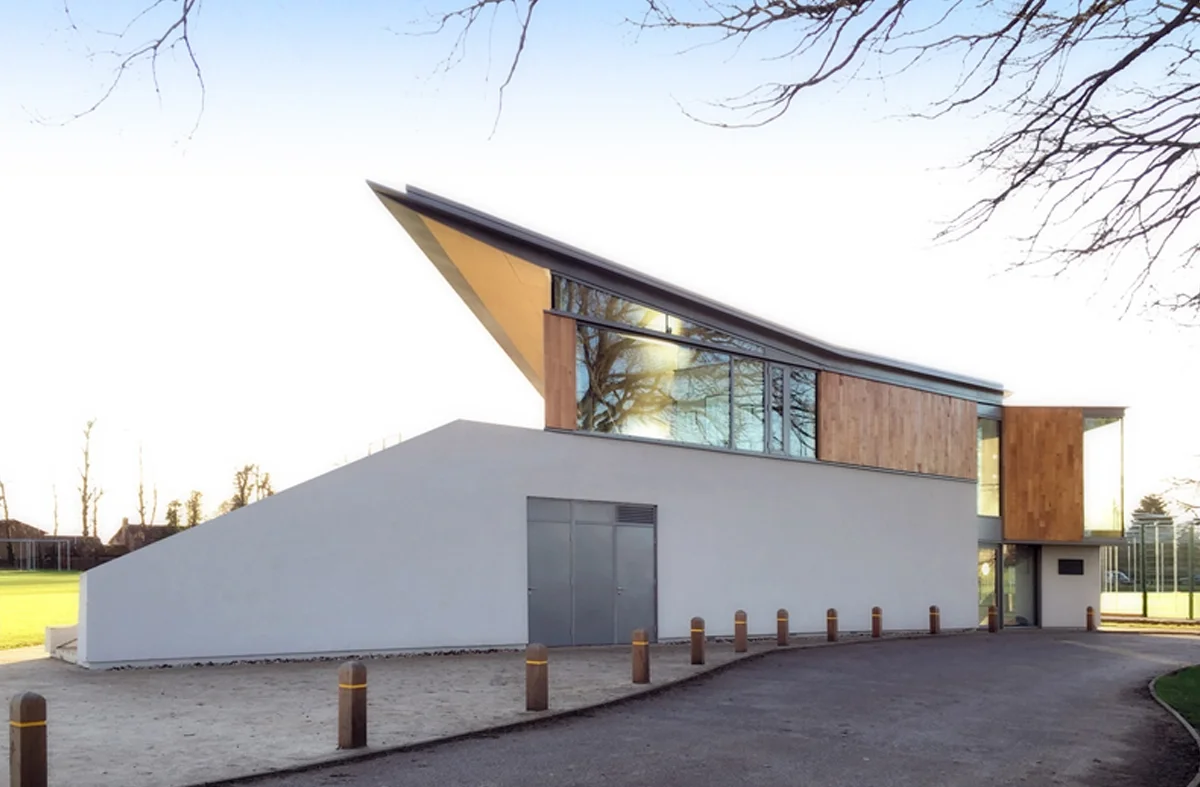
Levitate, as lead design architects designed an isosceles triangle plan for an efficient cricket pavilion. The form order to the ritual of use, orientated to the cricket square.
-
When a pre-tender estimate of c. £800,000 to repair and refurbish their existing cricket pavilion attracted tenders in the region of £1.2m, project leaders at Oundle School decided that there was little virtue in their original intention
to make do and mend. They hoped that a more sustainable building could be procured for a similar figure, and invited five architects
to participate in a design competition for a building that would also help in the increasingly competitive bid for new students.The existing building’s domestic character contributed little to its setting and, having been altered and extended, its footprint breached the outfield boundary. Its environmental footprint also didn’t stack up, with inefficient building services and low environmental performance. The building also needed extensive repair, having suffered structural damage caused by its proximity to mature trees, and – less obviously – had a subtly unnerving orientation, with its low eaves and limited views being set 5 degrees off- axis with the all-important cricket square.
-
Levitate’s architectural response was unanimously selected by the jury, who were impressed by how such a simple form could consolidate all necessary accommodation into an efficient and well-planned building that would cost less money.
Occupying land close to the existing plot,
the new pavilion takes a more commanding position. It also opens up views to and from the rugby pitches to the north, contributing much more to the school’s generous landscape of sports fields.The plan is simple, making it legible for visiting teams and efficient in its use of space and operation. Arranged within an isosceles triangle the programme is such that wilful asymmetry would have been contrived. As it is, the form not only brings order to the ritual of use, but also to the articulation of its component parts.
The solid base contains changing rooms for
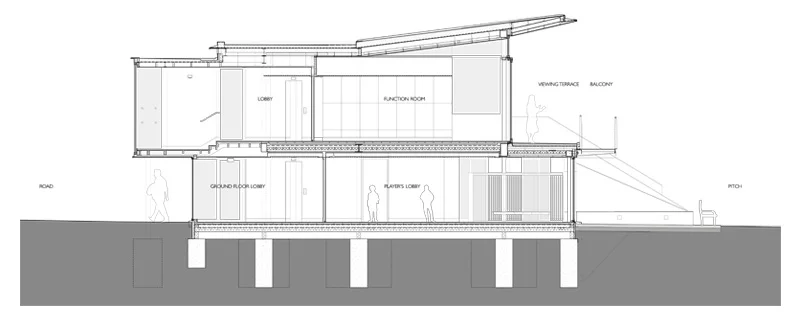
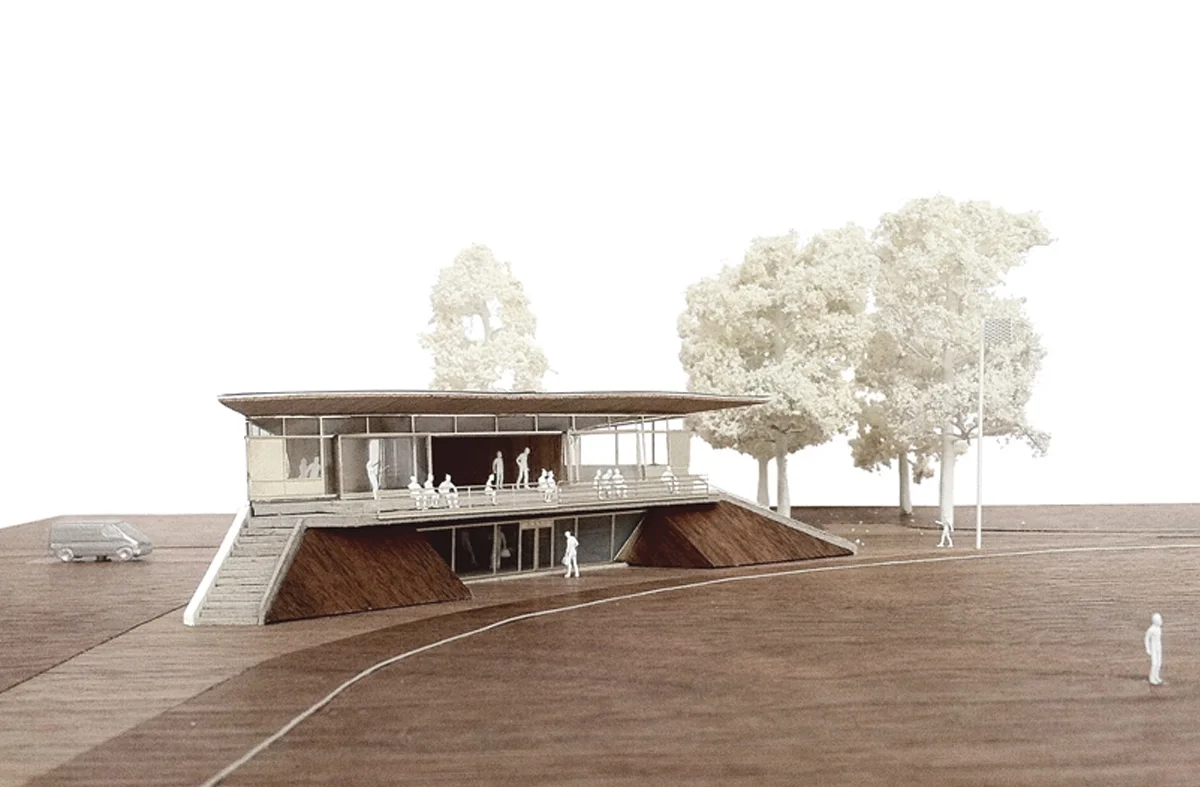
four teams and the umpires, along with storage and plant rooms that frame a generous players’ lobby where each successive batsman/woman can mentally prepare for their innings. The first floor places a large community function room at its heart, flanked by neatly planned kitchen, toilet and meeting rooms.In cross-section this arrangement is fully expressed, with the base partially embedded
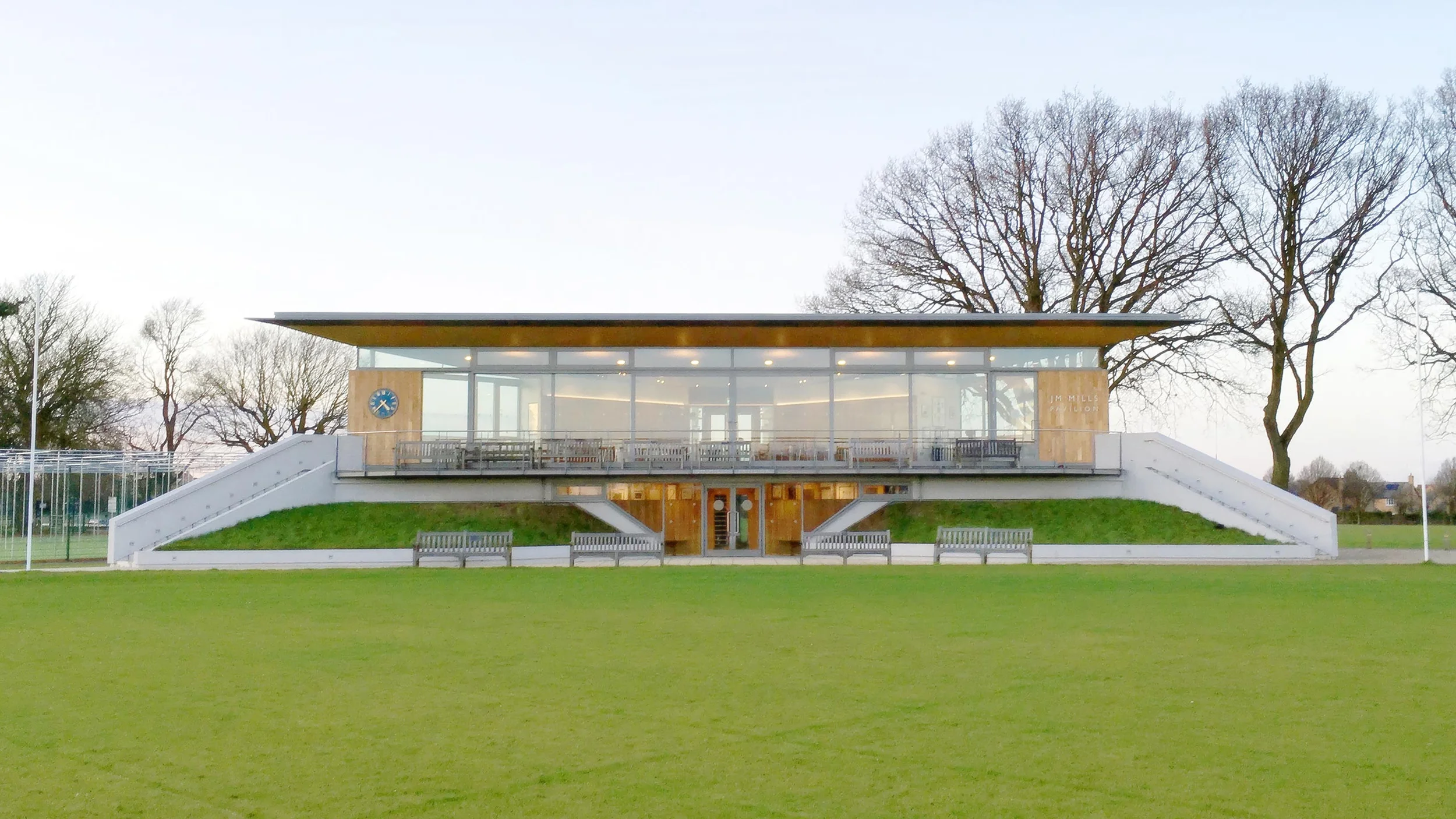
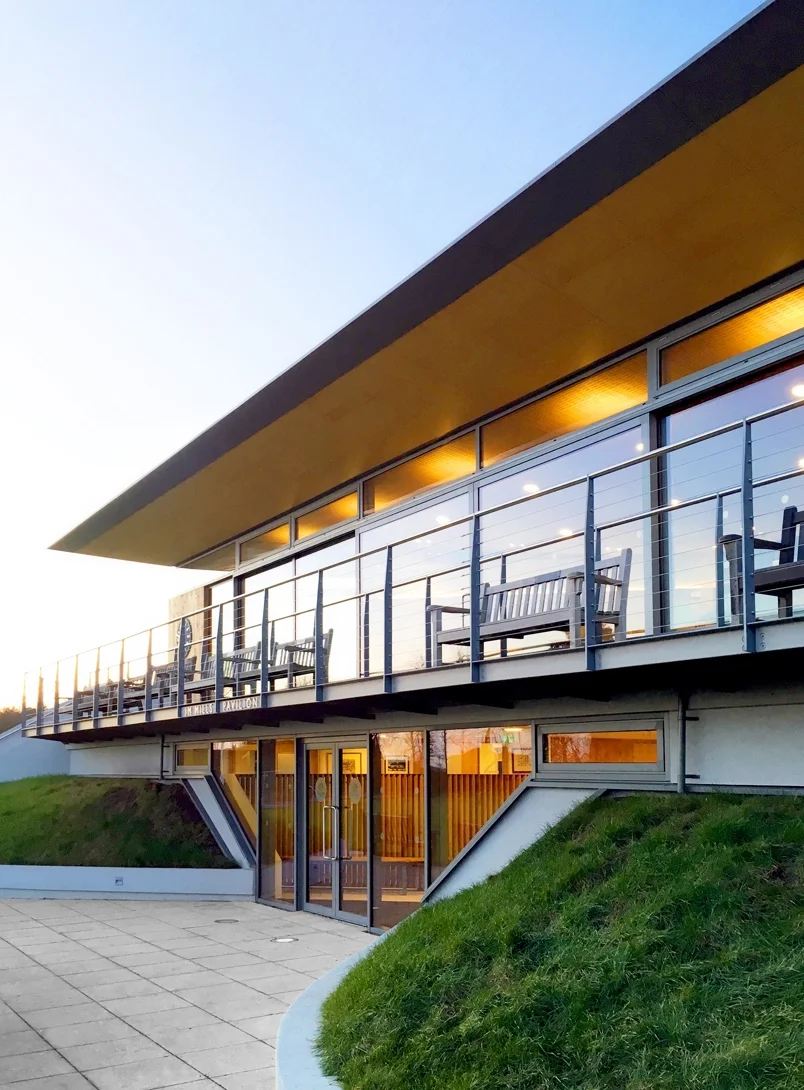
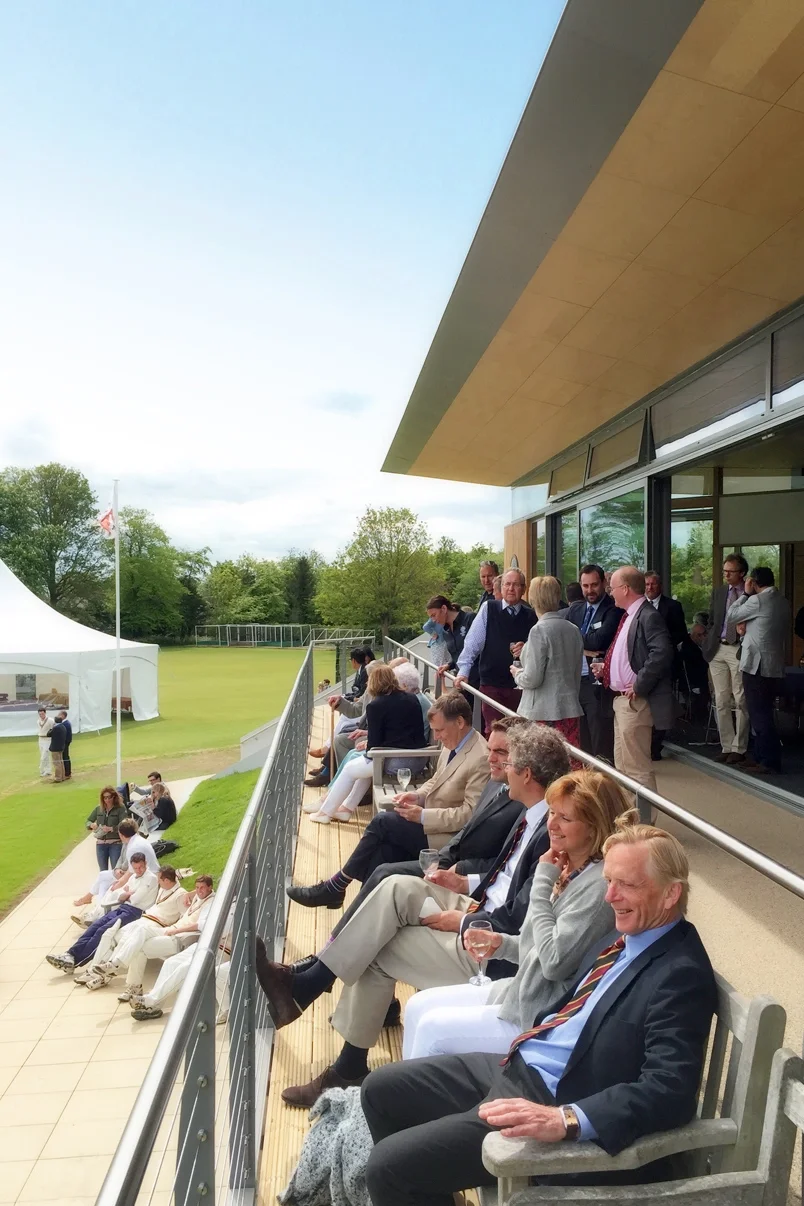
in a grass bank, where team mates can recline before and after they bat. Above this the function room is capped by a slim sharply detailed roof, which shelters and shades the split level balcony and terrace. -
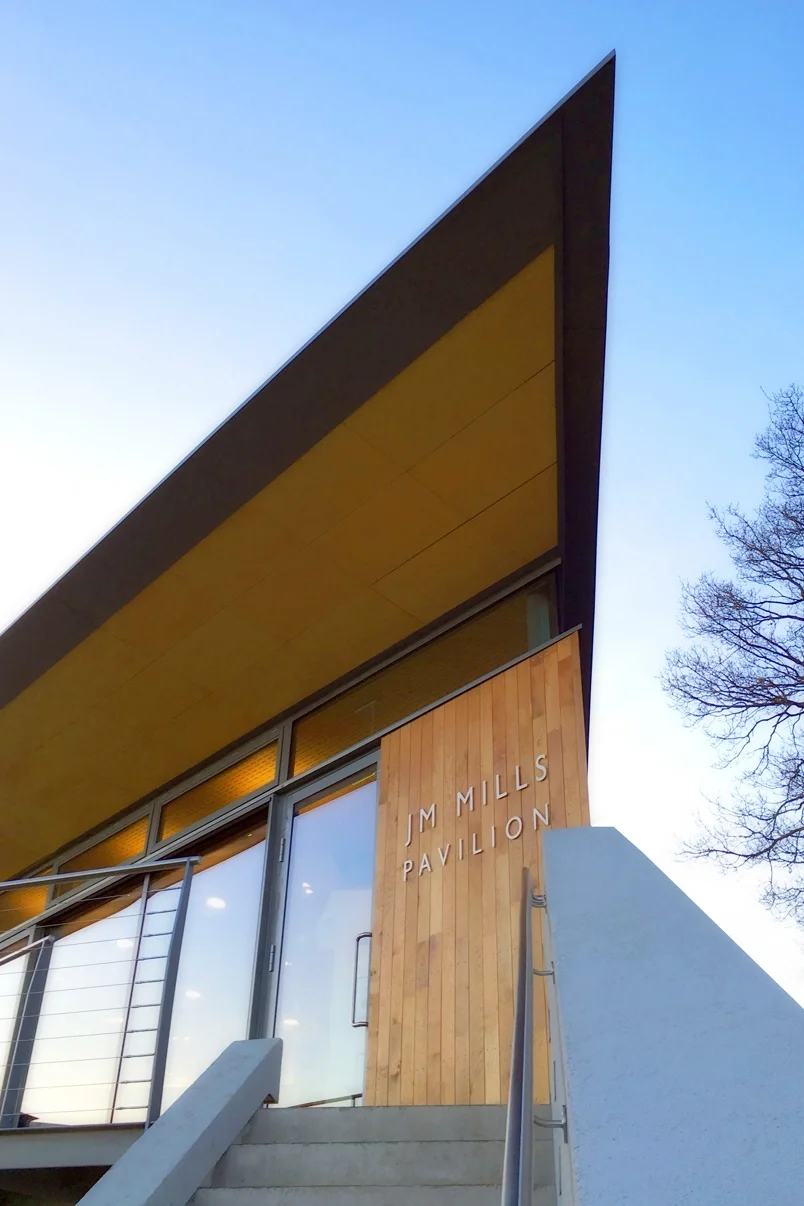
While efficient, functional and contemporary in language and expression, the pavilion extends the school’s 160 year cricketing heritage, with the community function room lined with the team boards and trophy cabinets framing the main entrance. Through this, the building is not only more sustainable in terms of the use of space and reduced energy demand, but also in terms of sustaining and prolonging the school’s valued sporting tradition.
All of this was achieved for just less than a million pounds, a few hundred thousand pounds less than the planned refurbishment.
click drawings to enlarge